
Physician Accounting Services
Healthcare Accounting Services for Medical Practices
Get cleaner books for patient payments, insurance deposits, payroll, vendor bills, equipment expenses, tax records, and monthly reporting, built for clinics, dental offices, and wellness practices across Texas.
- Practice bookkeeping
- Payroll records
- Tax-ready reporting
Why it matters
A better approach to healthcare bookkeeping
Patient balances, insurance payments, card deposits, provider payroll and supply costs pile up fast. This is exactly where accountants for healthcare earn their keep.
01
Deposits can hide payment detail
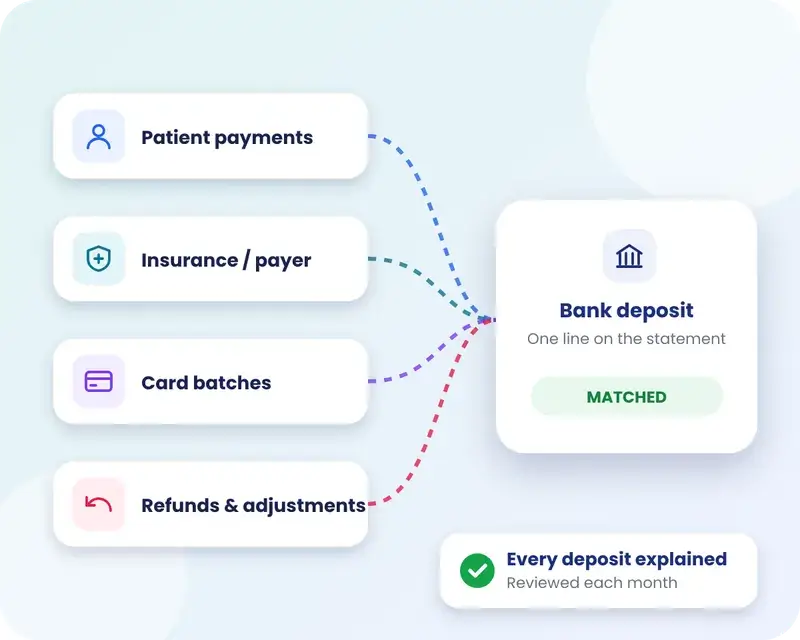
One deposit may combine patient payments, payer payments, card batches, refunds and adjustments.
02
Payroll is a major practice cost
Provider wages, admin staff, contractors, benefits and payroll taxes need to connect to the books.
03
Tax records need clean categories
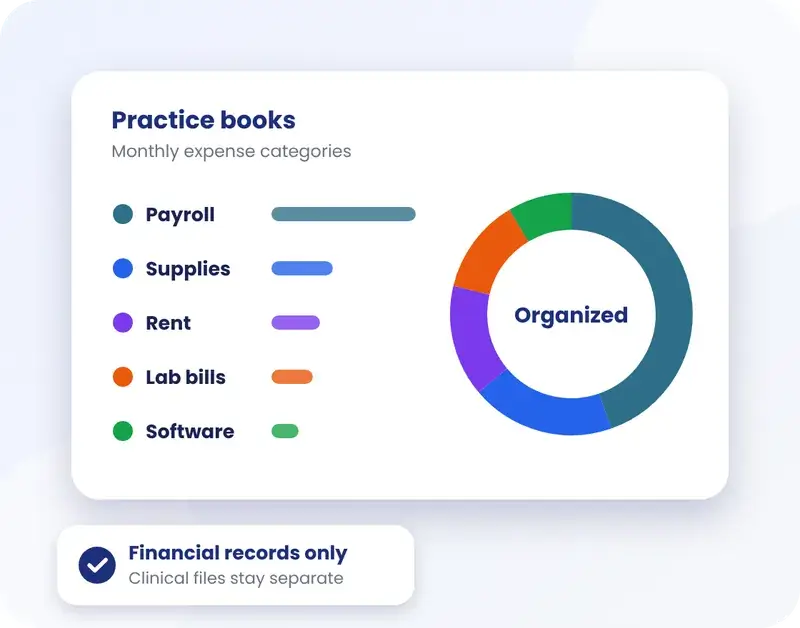
Supplies, equipment, rent, software, insurance and payroll organized before filing season.
What's Included
Accounting support built around healthcare practice activity
The exact scope depends on your practice type, payment systems, payroll setup and tax needs.
Monthly Practice Bookkeeping
Transactions can be categorized, reviewed, and reconciled so practice owners can understand income, expenses, and cash flow.
Patient Payment Records
Patient payments, card deposits, refunds, payment plans, and outstanding collection records can be organized from available reports.
Insurance Payment Records
Payer deposits, remittance summaries, adjustments, and timing differences can be reviewed as part of the financial record workflow.
Bank Reconciliation
Bank, merchant, and practice payment activity can be matched to supporting records so deposits are not left unexplained.
Payroll & Contractor Records
Provider payroll, admin staff wages, contractor payments, reimbursements, and year-end payroll records can be coordinated with the books.
Accounts Payable Support
Vendor bills, lab invoices, rent, software, insurance, supplies, and recurring practice expenses can be tracked more clearly.
Equipment & Supply Records
Medical supplies, dental supplies, office equipment, technology, repairs, and larger purchases can be categorized for reporting review.
Tax-Ready Reporting
Profit and loss reports, balance sheet records, payroll summaries, and supporting documents can be prepared for tax filing.
Records & Tools
Keeping Your Practice Finances Organized
Healthcare accounting works best when financial records are separated from clinical records. During onboarding, the scope is based on the reports and tools your practice already uses.
QuickBooks Online
Practice transactions, bank feeds, reconciliations, payroll records, and reports can be organized in QuickBooks Online.
Xero
Bank activity, expense categories, invoices, bills, payroll records, and monthly reports can be managed through Xero workflows.
Payroll Platforms
Gusto, ADP, QuickBooks Payroll, and similar payroll records can be coordinated with bookkeeping and year-end reporting.
Merchant Processors
Card deposits, processing fees, refunds, batch summaries, and timing differences can be reviewed for reconciliation.
Practice Reports
Billing, collections, patient payment, payer payment, and production summaries can support the accounting workflow when available.
Bank & Loan Records
Operating accounts, credit cards, equipment loans, financing payments, and owner activity can be reconciled and categorized.
Vendor Bills
Lab bills, supply invoices, software subscriptions, rent, insurance, utilities, and professional fees can be tracked for cleaner AP records.
Tax Documents
Payroll summaries, contractor records, business deductions, fixed asset records, and year-end reports can be organized for filing.
Regulatory Focus
How Ownership Rules Impact Healthcare Finances
How you structure your Texas medical practice changes healthcare tax accounting long before tax season starts. Ownership rules here are not optional paperwork. They decide who can legally hold the practice and how the books get split.
Physician ownership
Texas law restricts who can own a medical practice. A licensed physician holds it through a professional association or PLLC, not a standard LLC.
Management services (MSO)
An MSO can run marketing, scheduling and admin payroll for a fee while the PA or PLLC stays physician owned. That means two sets of books.
Provider pay
Owners are often paid through W-2 wages and distributions, while contracted providers add 1099 records. Each stays separate.
PA or PLLC
The entity types allowed to hold a Texas medical practice
Two entities
Clinical and management side books are kept separate under an MSO structure
Per-entity filing
Texas franchise tax applies separately to each entity in the structure
We keep your PLLC or PA books separate from your MSO or management entity, track management fees between them accurately, and organize provider payroll so W-2 wages, 1099 payments, and owner distributions are not mixed together.Entity structure involves legal requirements as well as tax ones. This section is general orientation, not legal advice for how to structure your practice.
Practice workflow
From patient payment to practice report
A stronger healthcare accounting workflow connects deposits, payment reports, payroll activity, vendor bills, and tax records so financial statements are easier to trust.
01
Payment
Patient payments, payer payments, card batches, refunds, and adjustments are reviewed from available financial reports.
02
Deposit
Bank deposits and merchant deposits are matched against supporting records where the information is available.
03
Payroll
Provider wages, staff payroll, contractor payments, reimbursements, and payroll taxes are coordinated with bookkeeping.
04
Expenses
Supplies, lab bills, insurance, software, equipment, rent, loan payments, and vendor expenses are categorized.
05
Reports
Monthly financial reports are prepared for practice visibility, management review, and tax readiness.
Services for Healthcare
Accounting Services Healthcare Practices Usually Need
Healthcare businesses benefit from coordinated bookkeeping services, payroll processing, back-office support, and tax filing, along with business formation support when needed, because their financial operations often span multiple systems.
Healthcare Bookkeeping
Monthly books for patient collections, payer deposits, bank activity, merchant fees, vendor bills, supplies, payroll records, and reporting.
- Transaction categorization
- Deposit reconciliation support
- Monthly practice reporting
Healthcare Tax Filing Support
Work with medical tax accountants who organize income, deductions, payroll summaries, contractor records, equipment purchases, and year-end financial statements.
- Deduction record organization
- Fixed asset and equipment records
- Year-end report preparation
Payroll for Healthcare Practices
Payroll coordination for providers, office managers, assistants, clinicians, contractors, caregivers, and practice owners.
- Employee payroll records
- Contractor payment tracking
- W-2 and 1099 support
Back Office Support
Accounts payable, vendor payments, invoice records, reimbursements, expense tracking, and month-end open items.
- Vendor bill organization
- Expense and reimbursement records
- Month-end close support
Business Formation
Start your healthcare practice with business entity formation, EIN registration, tax setup, and accounting support tailored to medical professionals and healthcare providers.
- LLC, PLLC & corporation formation support
- EIN & business tax registration
- Healthcare practice setup support
Practice Types
Healthcare Accounting for Different Practice Models
Each healthcare business has a different mix of patient payments, payer records, staff costs, supplies, equipment, and tax needs. Our accounting services for medical practices are built to reflect how your practice actually earns and spends money.
Medical clinics
Accounting services for doctors running clinics with patient collections, payer deposits, payroll, rent and vendor bills.
Dental practices
Bookkeeping for dental offices with patient payments, financing, supply costs, lab bills and team payroll.
Therapy providers
Therapy, counseling and physical therapy practices with sessions, payments, payroll and contractors.
Chiropractic offices
Patient payments, package revenue, supplies, payroll, rent and practice expenses.
Med spas & wellness
Service revenue, retail product sales, staff payroll, supplies, merchant fees and software.
Home health & care providers
Home health care accounting for caregiver wages, contractors, reimbursements and vendor bills.
Financial Record Focus
Clear Accounting Without Mixing in Clinical Records
The focus is on the financial side of the practice: deposits, payment summaries, payroll records, vendor bills, expenses, bank activity, and tax documents. Clinical records and patient care files should stay inside the systems designed for them.
What Belongs in Accounting
Bank transactions, payment reports, payroll summaries, vendor bills, receipts, loan documents, equipment purchases, and financial statements.
What Should Stay Clinical
Patient charts, diagnosis details, treatment notes, and clinical files should remain in your practice management or health record systems.
Why This Helps
Keeping the scope financial, reviewed by a healthcare tax accountant, makes the accounting process cleaner, easier to review, and more practical for ongoing bookkeeping and tax preparation.
How It Works
A Clear Healthcare Accounting Process
The process starts by understanding your practice type, payment flow, payroll setup, bookkeeping tools, and tax reporting needs.
01
Consultation
We review your practice structure, payment systems, payroll setup, current books, and financial record pain points.
02
Record Review
Bank records, payment reports, payroll summaries, bills, receipts, and current accounting files are reviewed.
03
Workflow Setup
We define how deposits, expenses, payroll, vendor bills, reimbursements, and reporting items will be handled.
04
Monthly Accounting
Transactions, reconciliations, payment records, payroll activity, bills, and reports are organized each month.
05
Reporting
You receive cleaner financial reports for cash flow review, expense tracking, payroll visibility, and tax readiness.
The Comparison
Why Growing Practices Call Us a Trusted Medical Accountant in Texas
Practices that outsource healthcare accounting services usually compare three paths before deciding. Handle the books alone, hire a general bookkeeper, or work with an accountant for your medical practice who already understands payer deposits and provider payroll.
| What You Need | DIY Software | Generalist Bookkeeper | Elite Accounting |
|---|---|---|---|
| Payer and patient deposit matching | Manual and time consuming | Rarely offered | Included every month |
| Provider payroll and 1099 tracking | You configure it yourself | Limited ecommerce experience | Built into the monthly workflow |
| PLLC/PA and MSO entity separation | Not addressed | Occasional at best | Actively managed |
| Multi-provider practices (clinics, dental, med spas, and more) | Manual setup per practice | One approach for every client | Native to how we work |
| Direct point of contact | Support forums only | Varies by provider | A dedicated accountant |
| Tax filing coordination | Separate tool or provider | Sometimes a separate provider | Coordinated with your bookkeeping |
Investment
What Does Healthcare Accounting Cost?
Pricing depends on practice size, provider count, and the medical accounting service tier that fits your practice. Compare these ranges against other healthcare accounting firms before you decide.
Bookkeeping
Starting at
$199
per month
Business Accounting Services
Starting at
$1,000
per year
Personal Accounting Services
Starting at
$1,500
per year
Common Questions
Common Healthcare Accounting Questions
Helpful answers for medical practices comparing healthcare bookkeeping, payroll support, patient payment records, accounts payable, tax filing support, and monthly reporting.
Healthcare accounting services help medical and wellness practices organize bookkeeping, payment records, payer and patient deposits, payroll records, vendor bills, expense categories, financial reports, and tax-ready records.
Monthly bookkeeping is usually helpful because patient payments, insurance deposits, payroll, vendor bills, supplies, merchant fees, and reimbursements can become difficult to review when they build up for months.
Yes, patient payment reports, payer payment summaries, card deposits, bank deposits, refunds, and adjustments can be reviewed as financial records, depending on access and scope.
Payroll records for providers, admin staff, assistants, clinicians, caregivers, contractors, and practice owners can be coordinated with bookkeeping and year-end reporting.
Yes, the accounting workflow can be adapted for dental offices, therapy providers, chiropractic offices, med spas, wellness businesses, clinics, and care providers based on their financial records.
Yes, cleaner healthcare books make tax filing easier by organizing income, deductions, payroll summaries, contractor records, equipment purchases, and supporting documents before filing begins.
Get Started Today
Ready for Cleaner Healthcare Practice Books?
Schedule a free consultation and find out what your practice needs for bookkeeping, payroll, patient payment records, accounts payable, back-office support, or tax-ready reporting.
Free 30-minute consultation · No contracts · Cancel anytime