
eCommerce Accounting for Texas Sellers
eCommerce Accounting Services for Texas Online Sellers
Get accounting services for ecommerce businesses that separate online sales, platform payouts, merchant fees, refunds, inventory activity, sales tax records, payroll, and filing-ready reports, built for Shopify, Amazon, and multi-channel sellers across Texas.
- Marketplace payout records
- Inventory and COGS support
- Tax-ready reporting
Why It Matters
We Help Online Sellers Turn Payouts Into Usable Financial Reports
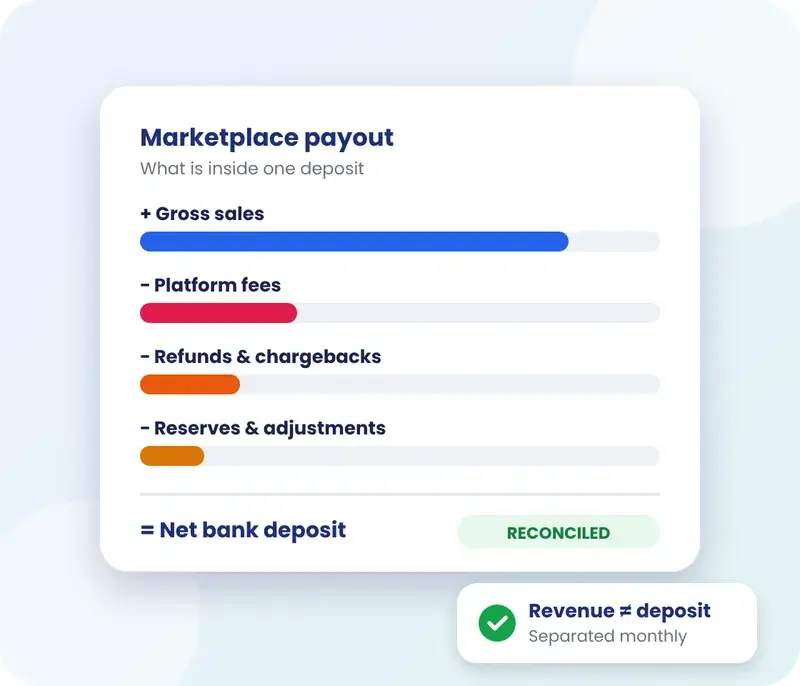
Online sellers receive deposits after fees, refunds, chargebacks, shipping adjustments, and marketplace deductions. Ecommerce accounting means separating those details so your reports show more than cash landing in the bank.
01
Payouts Do Not Equal Revenue
Marketplace and processor deposits may include sales, refunds, fees, reserves, taxes, and timing differences.
02
Inventory Affects Profit
Product costs, shipping costs, inventory purchases, and cost of goods sold need cleaner tracking to understand margin.
03
Tax Records Need Structure
Sales tax records, platform reports, deductions, and income activity should stay organized before tax filing begins.
What's Included
Accounting Support for Your Online Business
Elite Accounting helps organize the sales, fees, refunds, deposits, inventory records, payroll details, and tax documents that online sellers need to review each month.
Sales Channel Bookkeeping
We organize marketplace and store sales activity so revenue is not confused with net bank deposits.
Payout Reconciliation
We match processor and marketplace deposits against sales, refunds, fees, and timing differences.
Merchant Fee Tracking
We categorize platform fees, payment processor fees, subscriptions, app fees, and merchant charges more clearly.
Refunds & Chargebacks
We separate refunds, returns, chargebacks, reserves, and adjustments from regular sales activity.
Inventory & COGS Support
We review inventory purchases, product costs, and cost of goods sold records based on your inventory workflow.
Sales Tax Records
We organize sales tax reports and marketplace records for filing review and tax readiness.
Payroll & Contractor Records
We coordinate warehouse staff, contractors, virtual assistants, fulfillment support, and owner payroll with the books.
Tax-Ready Reporting
We prepare financial statements and supporting records so tax filing starts with clearer books.
Channels and Platforms
Accounting for the Systems Online Sellers Use
Your store may use several platforms to sell, collect payments, and track orders. From Shopify accounting to Amazon and Etsy settlement reports, we review the reports available from those systems and use them to support your bookkeeping workflow.








Regulatory Focus
Understanding Texas Sales Tax and Economic Nexus
Selling online does not remove your Texas sales tax responsibility. It changes how that responsibility gets calculated across every channel you sell on.
Physical Presence
An office, warehouse, employee, or stored inventory located in Texas creates a standing obligation to collect and remit sales tax on your direct sales.
Economic Nexus
Once your gross Texas revenue crosses the state threshold in a trailing 12 month period, a remote seller must register and collect, even without a physical location in Texas.
Marketplace Collection
Amazon, Walmart, Etsy, and similar marketplaces generally collect and remit Texas sales tax on facilitated orders already. A Shopify or WooCommerce store you run directly is a separate obligation you handle yourself.
$500,000
Rolling 12 month Texas economic nexus threshold for remote sellers
6.25% to 8.25%
Combined state and local sales tax rate range in Texas
All channels count
Marketplace sales apply toward your threshold, even when the platform collects for you
We track which channels are already taxed for you, watch your rolling Texas revenue against the threshold, and keep your ecommerce sales tax filing organized so nothing gets missed at registration time.Sales tax rules change and every business situation is different. This section is general orientation, not tax advice specific to your business.
Payout Workflow
How We Turn Online Sales Into Useful Reports
We help break down each payout into the details owners need to understand revenue, fees, refunds, inventory movement, cash flow, and tax preparation records.
01
Sale
Orders, discounts, shipping, taxes, refunds, and platform activity are reviewed from store or marketplace reports.
02
Fees
Marketplace fees, processor fees, app fees, chargebacks, and adjustments are separated from revenue.
03
Payout
Net deposits are matched against sales activity, timing differences, refunds, and withheld amounts.
04
Inventory
Product costs, inventory purchases, and cost of goods sold records are reviewed based on available reports.
05
Reports
Financial statements are prepared with cleaner revenue, expense, margin, and cash flow visibility.
Services for eCommerce
Support You Get Beyond Monthly Bookkeeping
As your online store grows, ecommerce bookkeeping services connect with payroll, contractor records, vendor bills, sales tax records, and tax filing. We help keep those pieces working together.
eCommerce Bookkeeping
Monthly records for sales channels, payment deposits, fees, refunds, subscriptions, inventory activity, and reporting.
- Sales channel activity
- Deposit reconciliation
- Profit and loss reporting
Payroll for Online Sellers
Payroll and contractor records for warehouse staff, support teams, fulfillment help, virtual assistants, and owners.
- Employee payroll records
- Contractor payment tracking
- W-2 and 1099 support
eCommerce Tax Filing Support
Work with an ecommerce tax accountant who organizes business income, deductions, sales tax records, payroll records, and filing preparation.
- Deduction review records
- Sales tax report organization
- Year-end reporting support
Back Office Support
Ecommerce back office support for vendor bills, invoices, platform subscriptions, expense records, reimbursements, and month-end open items.
- Vendor payments
- Expense records
- Month-end close support
Business Formation Services
Launch your online business with LLC or corporation formation, EIN registration, tax setup, and bookkeeping support tailored to ecommerce sellers.
- LLC & corporation formation
- EIN & tax registration
- eCommerce business setup support
Best Fit
Know Where Your Ecommerce Business Stands
We support online sellers who need clearer records for platforms, payouts, inventory, sales tax activity, payroll, expenses, and growth-related decisions.
Shopify and DTC Stores
You need Shopify bookkeeping that separates orders, refunds, fees, subscriptions, and deposits.
Amazon and Marketplace Sellers
You receive marketplace settlements that include fees, adjustments, refunds, reimbursements, and inventory-related activity.
Multi-Channel Sellers
You sell across multiple platforms and need a cleaner way to organize sales, payouts, inventory, and reports.
How It Works
How We Support Your eCommerce Accounting Each Month
We start by understanding your sales channels, payment processors, accounting tools, inventory workflow, and tax record needs, then build the monthly process around those inputs.
01
Consultation
We review your store platforms, payment processors, inventory workflow, accounting setup, and pain points.
02
Record Review
Sales reports, payout reports, processor activity, bank deposits, and current bookkeeping records are reviewed.
03
Workflow Setup
We define how platform activity, fees, refunds, deposits, inventory records, and reports will be handled.
04
Monthly Accounting
Transactions, sales channel records, reconciliations, fees, and reporting items are organized each month.
05
Reporting
You receive clearer financial reports for revenue, expenses, cash flow, inventory activity, and tax readiness.
The Comparison
Why Growing Sellers Call Us One of the Best Ecommerce Accountants in Texas
Most sellers choose between three paths. Handle the books alone, hire a general bookkeeper, or work with an accountant for your ecommerce business who already understands marketplace payouts and inventory. Here is what changes with each option.
| What You Need | DIY Software | Generalist Bookkeeper | Elite Accounting |
|---|---|---|---|
| Marketplace payout reconciliation | Manual and time consuming | Rarely offered | Included every month |
| Inventory and COGS tracking | You configure it yourself | Limited ecommerce experience | Built into the monthly workflow |
| Texas sales tax nexus monitoring | Not tracked automatically | Occasional at best | Actively monitored |
| Multi-channel support (Shopify, Amazon, Etsy, and more) | Manual setup per channel | One approach for every client | Native to how we work |
| Direct point of contact | Support forums only | Varies by provider | A dedicated accountant |
| Tax filing coordination | Separate tool or provider | Sometimes a separate provider | Coordinated with your bookkeeping |
Investment
What Does Ecommerce Accounting Cost?
Pricing depends on how many sales channels you run, monthly transaction volume, and whether you need payroll or back office support layered in. Most Texas sellers fall into one of three ranges.
Bookkeeping
Starting at
$199
per month
Business Accounting Services
Starting at
$1,000
per year
Personal Accounting Services
Starting at
$1,500
per year
Client Stories
What Our Bookkeeping Clients Say
“Before Elite Accounting I never really knew if my business was profitable month to month. Now I get my P&L on the 13th or 14th every single month. That visibility has completely changed how I make decisions.”
James M.
IT Consulting Firm, Plano TX
“My CPA told me my books were the cleanest she had seen all season. I used to spend two weeks gathering documents before tax time. Now it’s just a phone call to Elite Accounting and everything is already there.”
Rachel K.
Boutique Retail Owner, Austin TX
“I manage seven rental properties across Dallas and keeping separate records for each was a nightmare. Elite Accounting set up property-by-property tracking from day one. I always know exactly what each property is earning.”
Tony W.
Real Estate Investor, Dallas TX
Common Questions
Common Ecommerce Accounting Questions
Answers for online sellers comparing eCommerce bookkeeping, payout reconciliation, inventory records, sales tax support, payroll, and tax filing preparation
eCommerce accounting services help online sellers organize sales channel activity, platform payouts, payment processor fees, refunds, chargebacks, inventory records, sales tax reports, payroll records, and financial statements.
Payouts often combine multiple pieces of activity, including sales, fees, refunds, reserves, taxes, and adjustments. Clean accounting separates those pieces so reports are more useful.
Yes, store and marketplace reports from platforms such as Shopify and Amazon can be reviewed and organized as part of the accounting workflow, depending on access and scope.
Monthly bookkeeping is usually helpful because online sales, refunds, fees, deposits, and inventory activity can build up quickly if records are not reviewed regularly.
Sales tax records can be organized from available platform reports and business activity. Filing requirements and specific treatment should be reviewed based on the facts of the business.
Yes, cleaner eCommerce books make tax filing easier by organizing income, fees, expenses, inventory records, payroll records, and supporting documentation.
Get Started Today
Bring Your eCommerce Sales, Payouts, and Inventory Records Into Focus
Schedule a free consultation and find out what your online store needs for bookkeeping, payout reconciliation, sales tax records, payroll, back-office support, or tax-ready reporting.
Free 30-minute consultation · No contracts · Cancel anytime