
Restaurant Financial Management
Restaurant Accounting Services to Simplify Your Finances
Bring daily sales, tip activity, delivery payouts, food and beverage purchases, vendor bills, payroll, and tax records into a financial picture owners can actually use, built for Texas restaurants, bars, and food trucks.
- POS sales detail
- Tip and payroll records
- Food cost visibility
Restaurant Reality
Keep Your Books in Step With Your Restaurant
A restaurant can have a strong dining room and still struggle to read its numbers. Sales arrive through POS batches, cash drawers, tips, gift cards, delivery apps, refunds, and deposits that do not always match the day they happened. Accounting for restaurant business owners means turning that daily noise into numbers you can trust.
01
Sales Have Layers
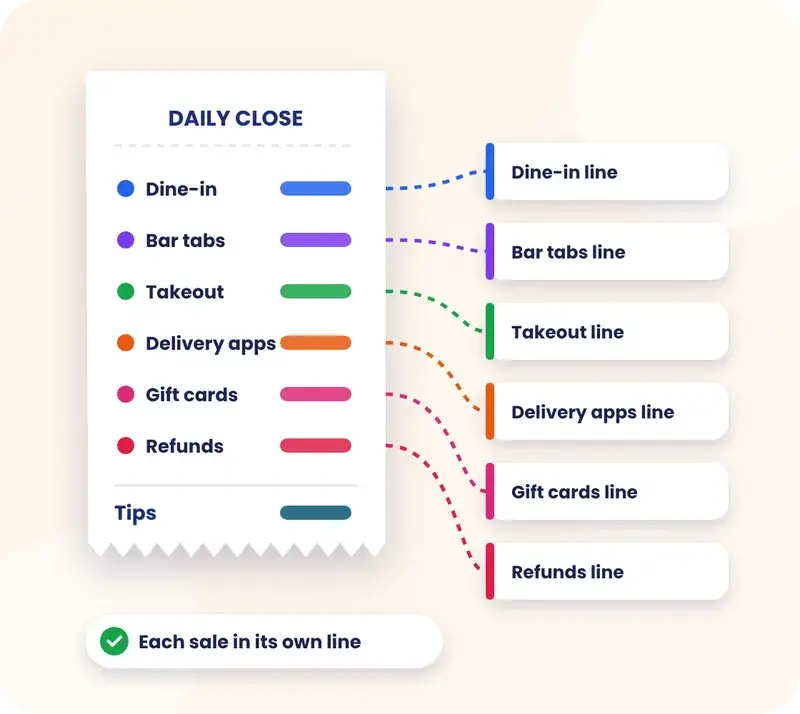
Dining room sales, bar tabs, takeout, delivery app orders, discounts, refunds, and gift cards all need a clear place in the records.
02
Labor Changes Fast
Hourly wages, overtime, tip reporting, manager pay, payroll taxes, and contractor payments can shift from week to week.
03
Vendor Spend Adds Up
Food, beverage, paper goods, cleaning supplies, repairs, linen, and small equipment purchases can blur margins if bills pile up.
Daily Sales Detail
Numbers That Help You Understand Your Restaurant
Restaurant accounting should not flatten every deposit into one income line. The records below help show where money came from, what was paid out, and what still needs attention.
POS Sales Summaries
Daily POS reports can be reviewed for dine-in sales, takeout orders, refunds, voids, discounts, gift cards, and tax collected.
Merchant Deposits
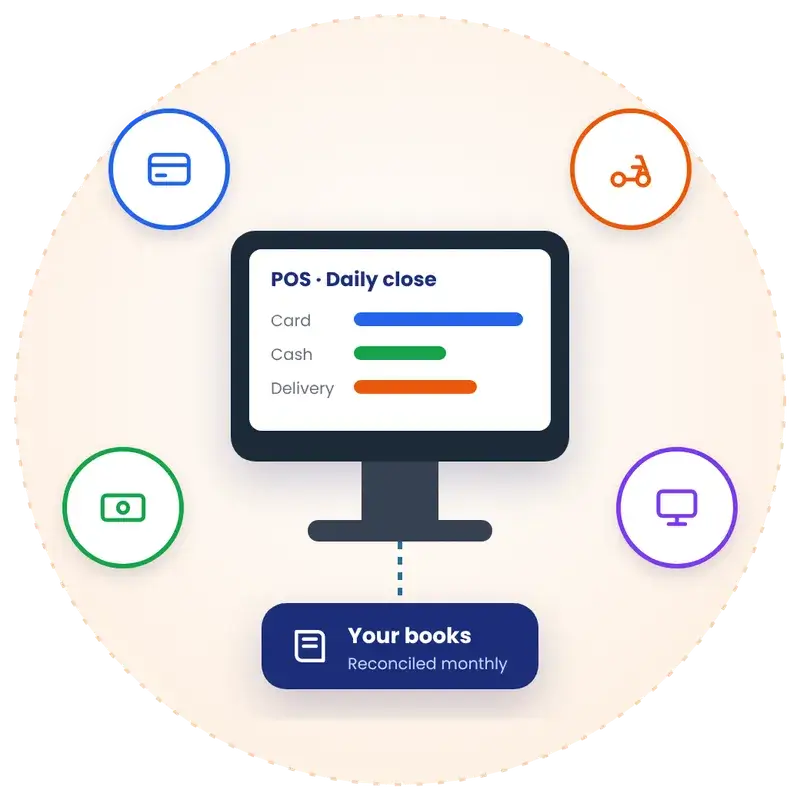
Card batches, processor fees, payout timing, and bank deposits can be matched so sales activity does not drift from cash received.
Delivery App Payouts
Third-party delivery deposits, commissions, adjustments, refunds, and fees can be separated from in-house sales records.
Cash Drawer Activity
Cash sales, paid-outs, deposits, tip cash-outs, shortages, and overages can be tracked with the available daily close records.
Tips & Gratuities
Tip activity can be coordinated with payroll records so employee pay, reported tips, and employer records stay aligned.
Food & Beverage Purchases
Vendor bills for food, liquor, beer, wine, and kitchen supplies can be categorized for better cost visibility.
Sales Tax Records
Tax collected, taxable sales, exempt activity, filings, and payment records can be organized from POS and accounting reports.
Payroll & Payroll Taxes
Employee wages, overtime, manager pay, payroll taxes, benefit deductions, and owner payroll can be tied back to the books.
Vendor Bills
Invoices for food, beverage, linen, cleaning, repairs, utilities, software, and rent can be tracked before due dates become noise.
Repairs & Equipment
Kitchen repairs, smallwares, appliances, furniture, leasehold improvements, and equipment purchases can be categorized for review.
Owner Activity
Owner draws, reimbursements, capital contributions, meals, transfers, and business credit card activity can be separated clearly.
Month-End Reports
Income statements, balance sheet items, payroll summaries, sales tax records, and supporting documents can be prepared for review.
Systems & Source Records
Clear Daily Reports for Better Restaurant Decisions
The goal is to connect the restaurant systems you already use with the books. During onboarding, the available reports and access points are reviewed before the monthly workflow is set.
POS Reports
Sales summaries, close reports, payment types, gift cards, discounts, refunds, voids, and tax details can support the accounting file.
Delivery Platforms
Marketplace order reports, commissions, promotions, refunds, and payout summaries can be reviewed against bank deposits.
Payroll Platforms
Gusto, ADP, QuickBooks Payroll, and similar payroll records can be coordinated with wages, tips, taxes, and year-end forms.
QuickBooks & Xero
Restaurant transactions, bank feeds, vendor bills, payroll records, sales tax activity, and financial reports can be organized in the accounting platform.
Vendor Invoices
Food suppliers, beverage distributors, linen services, repairs, cleaning, utilities, rent, and software invoices can feed the payables workflow.
Bank & Card Accounts
Operating accounts, credit cards, loans, deposits, transfers, merchant fees, and owner activity can be reconciled each month.
Inventory Worksheets
Food and supply counts can be included when the restaurant keeps inventory records for management review.
Tax Filing Documents
Payroll summaries, sales tax records, contractor forms, fixed asset details, and year-end reports can be gathered before filing.
Regulatory Focus
Texas Mixed Beverage Tax and Tip Reporting for Restaurants
How you record food and beverage accounting changes once alcohol enters the picture. A bar tab is not taxed the same way as a plate of food, and Texas has two separate taxes just for mixed drinks.
Mixed Beverage Gross Receipts Tax
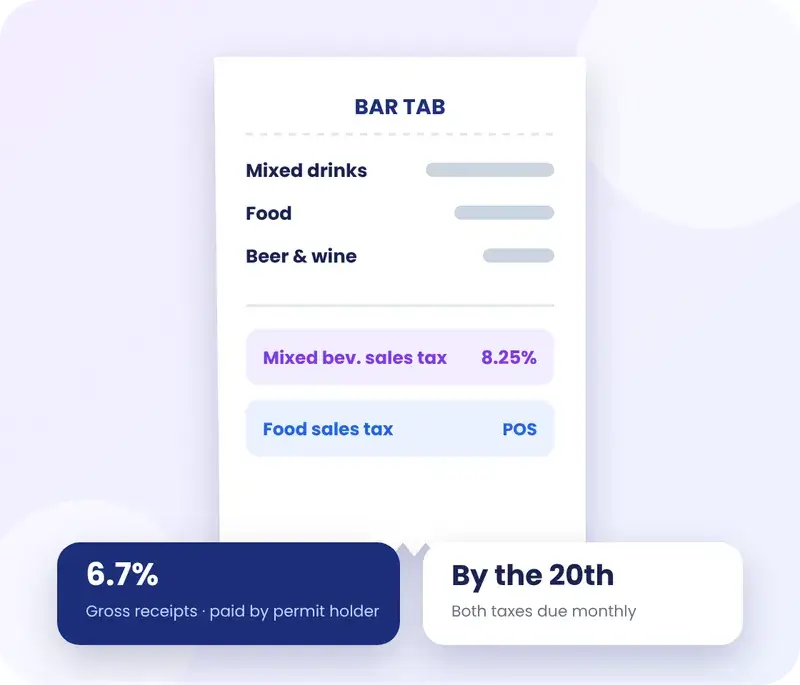
Texas charges a 6.7 percent gross receipts tax on mixed beverage sales. The permit holder pays this tax, and it cannot be listed as a separate line on the guest check.
Mixed Beverage Sales Tax
A separate 8.25 percent mixed beverage sales tax applies on top of that one, charged to the customer and handled much like standard sales tax. Both taxes are due monthly, by the 20th.
Tip Reporting and Credit
Reported tips affect payroll tax withholding, minimum wage tip credit calculations, and the employer's FICA tip credit. Missing or inconsistent tip records create payroll tax exposure that shows up at audit, not at close.
6.7%
Mixed beverage gross receipts tax, paid by the permit holder
8.25%
Mixed beverage sales tax, charged to the customer on the same drinks
Monthly
Both mixed beverage taxes are due by the 20th of each month
We separate mixed beverage gross receipts and sales tax from your regular POS sales tax records, keep tip reporting tied to payroll each pay period, and flag filing deadlines before they are missed.Mixed beverage tax applies only to businesses with a TABC mixed beverage permit. This section is general orientation, not tax advice for your specific permit or menu.
Daily Close to Month-End
How Restaurant Activity Becomes Usable Financial Reports
A practical restaurant workflow respects the daily close. Sales activity, deposits, vendor bills, payroll, and tax records each have to land in the right place before reports are useful.
01
Close the Day
POS totals, tender types, cash notes, discounts, refunds, gift cards, and sales tax details are collected from the daily close.
02
Separate the Money
Card batches, cash deposits, delivery payouts, processor fees, and payout timing are sorted before they hit the reports.
03
Code the Bills
Food, beverage, labor-related costs, rent, repairs, utilities, software, and supplies are categorized with restaurant operations in mind.
04
Reconcile Accounts
Bank accounts, credit cards, merchant deposits, loans, and payroll activity are compared against source records.
05
Read the Month
Reports are prepared so ownership can review sales, food cost, labor, vendor spend, cash flow, and filing readiness.
Connected Services
The Role Accounting Plays in Your Restaurant
Restaurant finances do not sit in one neat bucket. Restaurant bookkeeping services, payroll processing, back-office support, tax filing, business formation, and owner reporting are interconnected, making coordinated financial management essential for restaurant businesses.
Restaurant Bookkeeping
Bookkeeping for restaurant business owners covers POS sales, delivery payouts, merchant fees, tips, vendor bills, payroll, bank activity, and owner transactions each month.
- Daily sales summary support
- Cash, card, and delivery deposit matching
- Restaurant-focused monthly reporting
Restaurant Payroll
Payroll records for hourly staff, tipped employees, managers, kitchen teams, event staff, contractors, and owners.
- Tip and wage record coordination
- Payroll tax support records
- W-2 and 1099 organization
Restaurant Back Office
Bill organization for vendors, suppliers, rent, utilities, software, repairs, linen, cleaning, and recurring operating costs.
- Accounts payable tracking
- Vendor statement review
- Month-end open item cleanup
Restaurant Tax Filing Support
Filing-ready records for income, sales tax activity, payroll summaries, contractor payments, equipment, deductions, and owner records.
- Sales tax record organization
- Deduction and equipment records
- Year-end financial packages
Restaurant Business Formation
Start your restaurant business with LLC or corporation formation, EIN registration, tax setup, and accounting support tailored to restaurants, cafes, and food service businesses.
- LLC & corporation formation support
- EIN & business tax registration
- Restaurant business setup support
Food Business Types
Accounting for the Way Your Restaurant Actually Runs
A full-service restaurant, coffee shop, food truck, and catering company do not create the same records. Accounting services for restaurants should follow the sales channels, staffing model, inventory habits, and vendor rhythm of the business.
Full-Service Restaurants
Support for table service sales, bar sales, tips, payroll, food and beverage purchases, rent, utilities, and vendor bills.
Quick Service & Fast Casual
Records for high-volume POS activity, merchant fees, labor costs, delivery app orders, supplies, and daily deposits.
Cafes & Coffee Shops
Bookkeeping for counter sales, catering orders, gift cards, subscriptions, payroll, beans, dairy, packaging, and supplies.
Bars & Lounges
Accounting for beverage purchases, tips, cash activity, entertainment costs, payroll, licenses, merchant deposits, and tax records.
Food Trucks
Records for event sales, mobile POS activity, commissary costs, fuel, permits, supplies, payroll, and owner reimbursements.
Catering & Meal Prep
Support for deposits, event invoices, delivery costs, food purchases, staff pay, contractor records, and job-related expenses.
Owner Visibility
The Financials You Need to Run Your Restaurant
The right reports help ownership move beyond the bank balance. Accounting for restaurant owners should make it easier to review what is happening with sales, labor, food purchases, bills, and cash timing.
Prime Cost Clues
Food, beverage, and labor costs can be grouped in a way that supports cost accounting for restaurants and helps owners watch the biggest operating pressures.
Vendor Spend Patterns
Supplier bills, recurring charges, repairs, and utilities can be reviewed so expenses do not disappear into broad categories.
Cash Flow Timing
Merchant deposits, delivery payouts, payroll drafts, sales tax payments, rent, and vendor due dates can be easier to understand.
Payroll Pressure
Hourly pay, overtime, manager pay, tips, payroll taxes, and staffing-related costs can be reviewed alongside sales activity.
Sales Tax Readiness
Collected tax, taxable sales, payment records, and filing support can be organized from POS and accounting data.
Owner Pay & Draws
Owner withdrawals, payroll, reimbursements, transfers, and contributions can be separated from restaurant operating expenses.
Monthly Rhythm
Accounting That Keeps Your Restaurant Ready All Year
The best time to fix restaurant records is before several months of sales, tips, bills, and payroll stack up. A monthly rhythm keeps the work more manageable.
01
Review Setup
We look at your POS reports, bank accounts, payroll records, vendor bills, sales tax process, and current accounting file.
02
Map Records
Sales, deposits, tips, payroll, food purchases, delivery payouts, and vendor bills are mapped into a practical chart of accounts.
03
Reconcile
Bank accounts, credit cards, merchant deposits, payroll activity, and loan accounts are checked against available source records.
04
Review Open Items
Missing invoices, unclear deposits, uncategorized purchases, sales tax questions, and payroll record gaps are flagged for review.
05
Prepare Reports
Monthly reports are prepared for management review, sales tax records, payroll visibility, vendor spend, and tax filing support.
The Comparison
Why Restaurant Owners Call Us a Trusted Restaurant Accountant in Texas
Restaurant owners who look into outsourced restaurant accounting usually compare three paths before deciding. Handle the books alone, hire a general bookkeeper, or bring in restaurant accounting consulting that already understands POS layers and tip reporting.
| What You Need | DIY Software | Generalist Bookkeeper | Elite Accounting |
|---|---|---|---|
| Daily POS and delivery payout reconciliation | Manual and time consuming | Rarely offered | Included every month |
| Tipped payroll and tip reporting | You configure it yourself | Limited restaurant experience | Built into the monthly workflow |
| Mixed beverage tax tracking | Not tracked automatically | Occasional at best | Actively monitored |
| Multiple sales channels (dine-in, delivery, catering, and more) | Manual setup per channel | One approach for every client | Native to how we work |
| Direct point of contact | Support forums only | Varies by provider | A dedicated accountant |
| Tax filing coordination | Separate tool or provider | Sometimes a separate provider | Coordinated with your bookkeeping |
Investment
What Does Restaurant Accounting Cost?
Pricing depends on location count, POS and delivery channels, and whether you need payroll or back office support layered in. Compare these ranges against other restaurant accounting firms before you decide.
Bookkeeping
Starting at
$199
per month
Business Accounting Services
Starting at
$1,000
per year
Personal Accounting Services
Starting at
$1,500
per year
Common Questions
Common Restaurant Accounting Questions
Answers for restaurant owners comparing restaurant bookkeeping, daily sales reconciliation, payroll support, vendor bill tracking, sales tax records, and tax filing support.
Restaurant accounting services help food businesses organize POS sales, card deposits, cash activity, delivery app payouts, tips, payroll, vendor bills, food and beverage purchases, sales tax records, and monthly financial reports.
Restaurants have daily sales activity, multiple payment types, tipped payroll, food and beverage costs, sales tax, gift cards, cash handling, and vendor invoices that need more detailed review than a simple bank-feed workflow.
Yes, POS summaries, delivery app payout reports, merchant deposits, refunds, fees, and tax details can be reviewed when the reports are available and included in the service scope.
Payroll records for tipped employees, hourly staff, managers, kitchen teams, contractors, and owners can be coordinated with the bookkeeping and year-end reporting process.
Food cost visibility depends on the records available. Vendor bills and inventory records can be organized so food, beverage, and supply purchases are easier to review.
Yes, restaurant accounting can prepare records for income, deductions, sales tax activity, payroll summaries, contractor payments, equipment purchases, and other documents needed before filing.
Get Started Today
Bring Your Restaurant Numbers Into One Clear Monthly View
Schedule a free consultation and review what your restaurant needs for POS sales records, payroll, vendor bills, sales tax records, back-office support, or filing-ready reports.
Free 30-minute consultation · No contracts · Cancel anytime