
Property Accounting for Texas Owners
Real Estate Accounting Services for Property Owners and Operators
Get cleaner books for rental income, property expenses, owner distributions, repairs, loans, contractor payments, payroll, and tax-ready reporting, built for Texas rental owners, investors, and property managers.
- Property-level bookkeeping
- Rent and expense records
- Tax-ready reporting
Why It Matters
Bookkeeping That Tracks Each Property
Real estate finances can look simple from the bank account, but the details matter. Rent deposits, security deposits, repairs, improvements, mortgage payments, management fees, and owner distributions all need clear records so each property can be reviewed properly. This is exactly where accountants for real estate earn their keep.
01
Deposits Need Context
Rent, security deposits, late fees, reimbursements, owner contributions, and sale proceeds should not all be treated the same.
02
Expenses Property Tracking
Repairs, utilities, insurance, taxes, software, management fees, and contractor costs are easier to review when tied to the right property.
03
Tax Records Need Support
Loan interest, closing costs, improvements, depreciation records, contractor payments, and year-end reports should be organized.
What's Included
Financial Support for Your Real Estate Business
The exact scope depends on your properties, entity structure, rent collection process, property management workflow, payroll setup, and tax needs. These are the bookkeeping services for real estate business owners who need records organized.
Monthly Property Bookkeeping
Transactions can be categorized, reviewed, and reconciled so owners can see income, expenses, and cash flow by property.
Rental Income Records
Rent, fees, reimbursements, deposits, move-in payments, and tenant-related income can be organized from available reports.
Property Expense Tracking
Repairs, utilities, HOA dues, insurance, property taxes, management fees, software, and supplies can be categorized more clearly.
Bank Reconciliation
Operating accounts, property accounts, credit cards, rent deposits, and owner contributions can be matched to supporting records.
Loans & Mortgage Records
Mortgage payments, loan interest, escrow activity, principal payments, financing costs, and property loans can be organized for review.
Owner Distributions
Owner draws, partner distributions, contributions, reimbursements, and transfers between entities or properties can be tracked more carefully.
Payroll & Contractor Records
Property staff, office teams, maintenance help, contractors, and year-end W-2 or 1099 records can be coordinated with the books.
Tax-Ready Reporting
Profit and loss reports, balance sheet records, loan support, fixed asset records, and year-end reports can be prepared for tax filing.
Records & Tools
Stay on Top of Your Real Estate Finances
Real estate accounting works best when rent records, property reports, bank activity, vendor bills, payroll records, and tax documents are connected clearly. Access and scope are reviewed during onboarding.
QuickBooks Online
Property transactions, bank feeds, reconciliations, class tracking, payroll records, and reports can be organized in QuickBooks Online.
Xero
Bank activity, expense categories, invoices, bills, payroll records, and monthly reports can be managed through Xero workflows.
Property Management Reports
Rent rolls, owner statements, tenant ledgers, management fee reports, and maintenance records can support the accounting workflow.
Short-Term Rental Platforms
Platform deposits, guest payments, fees, refunds, cleaning charges, and payout summaries can be reviewed for bookkeeping.
Payroll Platforms
Gusto, ADP, QuickBooks Payroll, and similar payroll records can be coordinated with bookkeeping and year-end reporting.
Bank & Loan Records
Operating accounts, property accounts, credit cards, mortgages, equipment loans, and owner activity can be reconciled and categorized.
Vendor Bills
Repairs, contractors, cleaning, utilities, insurance, software, legal fees, professional fees, and supplies can be tracked for cleaner AP records.
Tax Documents
1099 records, closing statements, loan statements, fixed asset records, depreciation support, and year-end reports can be organized for filing.
Regulatory Focus
Understanding 1031 Exchanges and Property Tax
Two clocks run against every Texas property owner. One is the federal deadline on a 1031 exchange. The other is your county appraisal district’s protest window. Missing either one is expensive.
1031 Exchange Timelines
A 1031 exchange lets you defer capital gains tax by reinvesting sale proceeds into another investment property. The clock starts the day you close on the sale, with 45 days to identify replacement property and 180 days to close on it.
Qualified Intermediary Rule
Sale proceeds cannot pass through your hands during a 1031 exchange. A qualified intermediary holds the funds between the sale and the purchase, and skipping this step disqualifies the entire exchange.
Property Tax Protests
Texas has no state income tax, but property tax rates are among the highest in the country, which is exactly why property tax accountants track appraisal notices as closely as depreciation schedules. Appraisal districts value property as of January 1 each year.
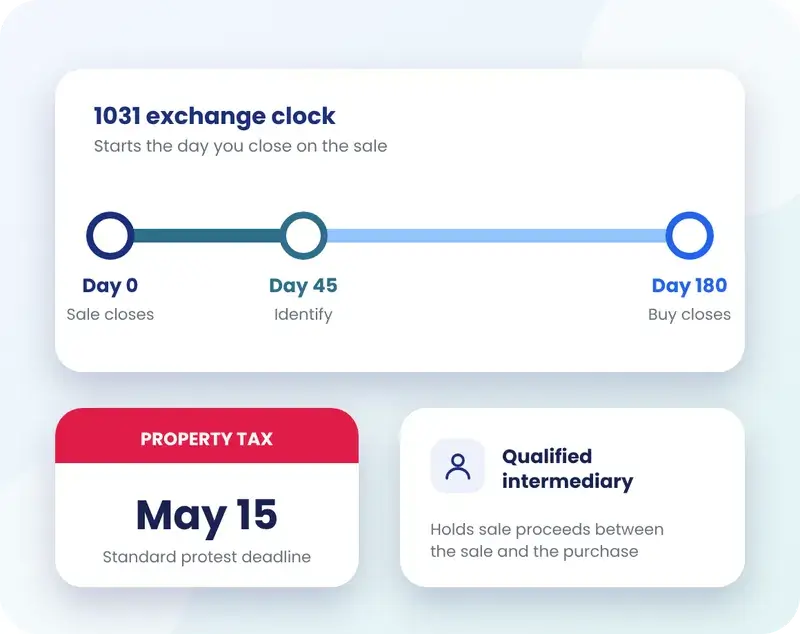
45 days
Window to identify replacement property in a 1031 exchange
180 days
Window to close on the replacement property after your sale
May 15
Standard Texas property tax protest deadline, or 30 days after your notice, whichever is later
We track 1031 exchange deadlines against your closing dates, keep depreciation and cost segregation records organized for tax filing, and flag property tax appraisal notices before protest windows close.Exchange rules and appraisal deadlines can vary by county and transaction. This section is general orientation, not tax or legal advice for your specific property.
Practice Workflow
From Rent Deposit to Property Report
A stronger real estate accounting workflow ties rent, expenses, loans, owner activity, payroll, and tax records back to the correct property or entity.
01
Income
Rent, fees, reimbursements, platform deposits, commissions, and owner contributions are reviewed from available records.
02
Property
Income and expenses are organized by property, unit, project, class, or entity when your accounting setup supports it.
03
Expenses
Repairs, utilities, insurance, taxes, software, management fees, and contractor payments are categorized.
04
Loans
Mortgage payments, escrow activity, interest, principal, closing costs, and financing records are organized for review.
05
Reports
Monthly reports are prepared for cash flow review, property performance, owner visibility, and tax readiness.
Services for Real Estate
Accounting Services Real Estate Businesses Usually Need
Real estate accounting often needs connected real estate bookkeeping services across payroll, back-office records, tax filing and business formation because money moves through properties, owners, vendors, tenants, and entities.
Real Estate Bookkeeping
Monthly books for rent, deposits, property expenses, mortgage activity, owner distributions, bank records, vendor bills, and reporting.
- Property-level transaction tracking
- Rent and expense records
- Monthly financial reporting
Real Estate Tax Filing Support
Work with a real estate tax accountant who organizes income, deductions, loan interest, closing costs, property tax filing, contractor records, fixed assets, and year-end reports.
- Deduction record organization
- Closing and loan document support
- Year-end report preparation
Payroll for Real Estate Teams
Payroll coordination for property staff, office teams, maintenance workers, assistants, contractors, and owners.
- Employee payroll records
- Contractor payment tracking
- W-2 and 1099 support
Back Office Support
Real estate back office solutions covering accounts payable, vendor payments, invoice records, reimbursements, expense tracking, and month-end open items.
- Vendor bill organization
- Owner and reimbursement records
- Month-end close support
Real Estate Business Formation
Set up your real estate business with LLC or corporation formation, EIN registration, tax setup, and accounting support tailored to property investors and real estate professionals.
- LLC & corporation formation support
- EIN & business tax registration
- Real estate business setup support
Practice Types
Real Estate Accounting for Different Business Models
A single rental property, a brokerage, and a property management company do not need the same accounting workflow. Our accounting services for real estate speak to the way each business earns, spends, and reports money.
Rental Property Owners
Work with a rental property tax accountant for rent income, repairs, mortgages, utilities, insurance, property taxes, owner draws, and property-level reporting.
Real Estate Investors
Records for acquisitions, rehab expenses, property loans, contractor payments, holding costs, sale activity, and entity-level reporting.
Property Managers
Property management accounting services covering management fees, owner statements, vendor bills, payroll records, contractor payments, and operating expenses.
Real Estate Agents & Brokers
Accounting for commissions, splits, marketing expenses, desk fees, mileage records, software costs, and contractor payments.
Short-Term Rental Owners
Records for platform deposits, cleaning fees, supplies, guest refunds, occupancy-related costs, software, and property expenses.
Developers & Builders
A commercial property accountant handles project costs, vendor bills, subcontractor records, draws, loan activity, and job-related financial reports.
Reporting Focus
Cleaner Records at the Property, Entity, and Owner Level
Real estate reporting becomes more useful when the books show what happened at each level of the business. This helps owners review cash flow, compare properties, prepare tax records, and understand which expenses need attention.
Property-Level Records
Rent, repairs, utilities, management fees, taxes, insurance, mortgage activity, and other expenses can be tied to the right property.
Entity-Level Records
Bank accounts, owner contributions, distributions, loans, administrative expenses, and transfers can be organized at the business level.
Tax-Ready Records
Closing statements, fixed assets, contractor records, payroll summaries, loan statements, and year-end reports can be prepared for filing.
How It Works
A Clear Real Estate Accounting Process
The process starts by understanding your property portfolio, entity setup, rent collection process, accounting tools, payroll records, and tax reporting needs.
01
Consultation
We review your properties, business model, rent records, bank accounts, current books, and financial record pain points.
02
Record Review
Bank records, rent reports, property statements, bills, receipts, payroll summaries, and accounting files are reviewed.
03
Workflow Setup
We define how rent, expenses, loans, owner activity, vendor bills, payroll records, and reports will be handled.
04
Monthly Accounting
Transactions, reconciliations, rent records, expenses, loan activity, bills, and reports are organized each month.
05
Reporting
You receive cleaner financial reports for property review, owner visibility, cash flow, and tax readiness.
The Comparison
Why Property Owners Call Us a Trusted Property Accountant in Texas
Property owners who outsource real estate accounting usually compare three paths before deciding. Handle the books alone, hire a general bookkeeper, or work with a residential property accountant who already understands rent rolls and owner draws.
| What You Need | DIY Software | Generalist Bookkeeper | Elite Accounting |
|---|---|---|---|
| Property-level income and expense tracking | Manual and time consuming | Rarely offered | Included every month |
| Owner distributions and entity-level records | You configure it yourself | Limited real estate experience | Built into the monthly workflow |
| 1031 exchange and property tax deadline tracking | Not tracked automatically | Occasional at best | Actively monitored |
| Multiple property types (rentals, short-term, commercial, and more) | Manual setup per property | One approach for every client | Native to how we work |
| Direct point of contact | Support forums only | Varies by provider | A dedicated accountant |
| Tax filing coordination | Separate tool or provider | Sometimes a separate provider | Coordinated with your bookkeeping |
Investment
What Does Real Estate Accounting Cost?
Pricing depends on how many properties or units you hold, entity structure, and whether you need payroll or back office support layered in. Compare these ranges against other real estate accounting firms before you decide.
Bookkeeping
Starting at
$199
per month
Business Accounting Services
Starting at
$1,000
per year
Personal Accounting Services
Starting at
$1,500
per year
Common Questions
Common Real Estate Accounting Questions
Helpful answers for property owners, investors, managers, brokers, and rental businesses comparing real estate bookkeeping, payroll support, real estate tax filing, and property-level reporting.
Real estate accounting services help property owners and real estate businesses organize bookkeeping, rent records, property expenses, mortgage activity, owner distributions, payroll records, vendor bills, financial reports, and tax-ready records.
Monthly bookkeeping is usually helpful when there are multiple rent deposits, repairs, utilities, loan payments, management fees, owner draws, contractor payments, or more than one property to track.
Yes, property-level tracking can be set up when your accounting system and available records support it, so income and expenses are easier to review by property, unit, project, or entity.
Payroll records for employees, office teams, maintenance staff, assistants, and contractors can be coordinated with bookkeeping and year-end reporting, including W-2 and 1099 support.
Yes, platform payouts, cleaning fees, guest refunds, supplies, occupancy-related expenses, mortgage costs, utilities, and property expenses can be organized as part of the bookkeeping workflow.
Yes, cleaner real estate books make tax filing easier by organizing income, deductions, loan records, closing statements, fixed assets, payroll summaries, contractor records, and supporting documents.
Get Started Today
Ready for Cleaner Real Estate Books?
Schedule a free consultation and find out what your property business needs for bookkeeping, rent records, payroll, accounts payable, back-office support, or tax-ready reporting.
Free 30-minute consultation · No contracts · Cancel anytime